














Americans can now search for specific government services in a tailored request through America.gov, which the Trump administration is celebrating on Tuesday in Washington.
The Trump administration launched a new AI-powered website Tuesday designed to make it easier for Americans to navigate federal government resources and services.
America.gov is being billed as a “one-stop shop” where users can find information and access government resources through an artificial intelligence-powered platform.
Author and entrepreneur Tony Robbins unveiled the website during an event in Washington, D.C., announcing that the platform is available for Americans to use immediately.
Robbins referenced former President Ronald Reagan’s famous line that the most terrifying words in the English language are, “I’m from the government, and I’m here to help.”
“Today, we’re gonna try to turn that around,” Robbins said.
The new platform is part of the Trump administration’s broader effort to expand the federal government’s use of artificial intelligence and streamline how Americans interact with government agencies.
The administration says America.gov is intended to simplify the process of finding federal information and services by providing a centralized place for users to navigate government resources.
Two U.S. Navy aviators safely ejected from their aircraft during a landing mishap aboard the USS Dwight D. Eisenhower off the coast of Virginia, an incident that also left four sailors aboard the aircraft carrier injured.
The mishap occurred at approximately 6:18 p.m. Monday during aircraft recovery operations aboard the nuclear-powered Nimitz-class carrier. The two aviators were assigned to Carrier Air Wing 3.
Search-and-rescue personnel quickly recovered both aviators following the ejection. They were returned safely to the Eisenhower and were being evaluated by medical personnel.
Four sailors aboard the carrier were also injured during the incident and received medical treatment. One was transported to a hospital in the Norfolk, Virginia, area with injuries described as non-life-threatening.
The Navy has not identified the type of aircraft involved, but confirmed it was a two-seat aircraft. Officials have also not disclosed what happened to the plane following the ejection.
The cause of the mishap remains under investigation, and the Navy has not released additional details about what occurred during the landing attempt.
The Eisenhower was conducting early carrier qualification operations after completing its most recent repair period in July. The carrier had departed Naval Station Norfolk earlier Monday.
The Navy said carrier crews regularly train for emergencies during flight operations and credited that preparation with allowing personnel to respond quickly and safely.
The USS Dwight D. Eisenhower was commissioned in 1977 and is one of the Navy’s Nimitz-class nuclear-powered aircraft carriers.
A police officer was taken into custody after the officer’s toddler pulled a loaded handgun from a backpack at a daycare in southeast Michigan, authorities said.
No one was injured in the incident Monday in Canton, about 30 miles west of Detroit. Police credited daycare staff with quickly recognizing the danger and intervening before anyone was hurt.
Canton Police Chief Joseph Bialy said surveillance video showed the child removing the loaded firearm from a backpack. A staff member who was in the room immediately stepped in and secured the situation.
The child’s parent, who works as a police officer in a neighboring jurisdiction, was later taken into custody as authorities investigated how the toddler gained access to the weapon.
Police said the handgun was not the officer’s department-issued service weapon.
Bialy said investigators do not believe anyone involved intended for the child to have access to the firearm, but emphasized the importance of properly securing guns and keeping them out of reach of children.
“I don’t think there was any ill intent by truly anyone involved,” Bialy said. “I think it really falls back on safe security of a firearm.”
The police chief described watching the surveillance footage as “shocking,” even knowing that no one was ultimately injured.
Authorities have not publicly identified the officer or announced what charges, if any, could result from the investigation.
The daycare already had security measures in place, but officials said it plans to strengthen its protocols following the incident, including searching all backpacks brought into the facility.
Police said the investigation remains ongoing.
Esther Wells, the Republican nominee for County Executive in Montgomery County, Maryland, discusses her political journey, fiscal concerns, and policy differences with her opponent. Wells, a former Democrat and CPA, became engaged in local politics after dissatisfaction with the county's COVID-19 response and its 24 years of Democratic rule. She emphasizes the need for fiscal discipline, lower taxes, and the importance of attracting high-income earners and corporations back to the county.
Wells criticizes her opponent’s policies on defunding the police and removing school resource officers, highlighting rising crime and school safety issues. She advocates for restoring police officers in schools and increasing police funding. Wells also addresses the debate on public financing of campaigns and calls for transparency and accountability in the upcoming election. She stresses the importance of a strong and healthy county executive to tackle pressing issues and ensure public safety.
In this discussion, the focus is on the recent terror plot in the United Kingdom, where five suspects were arrested but later released on bail. The conversation highlights the concerns and reactions to this decision, emphasizing the gravity of the situation. Nile Gardiner of the Heritage Foundation and Senator Ron Johnson join the discussion, expressing their views on the incident and its implications for national security. They discuss the potential political motivations behind the release and the broader context of rising terrorism and illegal immigration in Europe. The conversation also touches on the changing political landscape in the UK and Europe, hinting at possible shifts in leadership that could address these critical issues.
Senator Ron Johnson of Wisconsin addresses the troubling neglect of patients during the COVID-19 pandemic. Johnson highlights the systemic failures and human rights violations experienced by many, including the denial of visitation rights, refusal of life-saving treatments, and disregard for patient autonomy. Testimonies from 46 states revealed widespread neglect, with many patients and families pleading for medical interventions that were denied. Johnson emphasized the need for accountability, suggesting that while many healthcare workers acted heroically, some acted with cruelty and disregard for patients' rights. He advocates for legislative changes to prevent such abuses in the future, including the right to try experimental treatments for critically ill patients. This discussion underscores the urgent need for a reckoning with the pandemic's darker aspects to ensure such failures are not repeated.
Mayor of Chicago Brandon Johnson discusses the city's new policy to replace police officers with crisis mental health relief counselors for mental health-related calls. Johnson explains that the Crisis Assistance Response and Engagement (CARE) program deploys teams consisting of EMTs and mental health professionals. These teams can be requested through 911 for situations where a compassionate expert is needed to de-escalate and provide care.
Johnson emphasizes that while the idea of sending counselors instead of police officers for mental health crises has merit, there is concern about safety without law enforcement presence. He notes that while many cities use a co-responder model with trained officers and mental health professionals, Chicago's approach eliminates police presence altogether. Johnson raises concerns about potential violence and the ability to appropriately screen situations to avoid sending the wrong responders into harm's way.
Jason Johnson, president of the Law Enforcement Legal Defense Fund and former deputy commissioner of the Baltimore Police Department, adds that mental health crises are often co-morbid with substance abuse and homelessness. He argues that allowing individuals to remain on the streets exacerbates their mental health issues and makes the community more dangerous. While acknowledging that police respond to too many mental health-related calls, he stresses the importance of responder safety and suggests that mental health experts should accompany police to take the lead when appropriate.
The Trump administration is moving forward with a new higher-education accountability system that could eventually cut off federal student loans to college programs whose graduates consistently earn less than workers with lower levels of education.
The Education Department’s new Student Tuition and Transparency System, or STATS, will measure the earnings of graduates and compare them with an earnings benchmark for working adults with a lower credential. The administration says the goal is to prevent students from taking on federal debt for programs that provide little financial return.
The policy applies across higher education rather than only to a narrow group of career-oriented programs.
Under the final regulations, a program that fails the earnings test in two out of three award years would be classified as a low-earning outcome program and could lose access to the federal Direct Loan Program for at least two years. Some programs could also lose access to other forms of federal student aid, including Pell Grants, depending on the circumstances.
The first earnings test is expected to be calculated in early 2027, with July 1, 2027 marking the first year a program could officially fail the test. The earliest programs could lose access to federal student loans would generally be July 2028 after repeated failures.
The Education Department says the policy is intended to increase accountability and give students more information about whether a degree is likely to provide enough financial benefit to justify its cost.
“Federal student loans are not a welfare program for failing college programs,” an Education Department spokesperson told Fox News Digital, according to Townhall. The department said students deserve education and training that prepares them for the workforce, along with greater transparency about programs with poor financial outcomes.
The administration is not banning colleges from offering degrees that perform poorly under the earnings test. Instead, repeatedly failing programs could become ineligible for federal student loans, potentially requiring students to find other ways to finance those degrees.
The regulations include a wind-down option designed to protect students already enrolled in programs that fail the standard. Under an approved plan, current students could continue receiving federal loans while completing their degrees even as the school stops admitting new students to the affected program.
The earnings rule is part of a broader overhaul of federal student aid under President Donald Trump. Other changes that took effect this year include new borrowing limits for graduate students, new repayment options and expanded Pell Grant eligibility for certain short-term workforce training programs.
Supporters argue the earnings requirement could pressure colleges to lower costs and improve outcomes. Critics have raised concerns that tying federal aid to earnings could disproportionately affect programs in fields where graduates traditionally earn less despite providing services considered socially valuable.
The Education Department plans to begin publishing draft earnings data in 2027, allowing institutions to review the information before final figures are released.
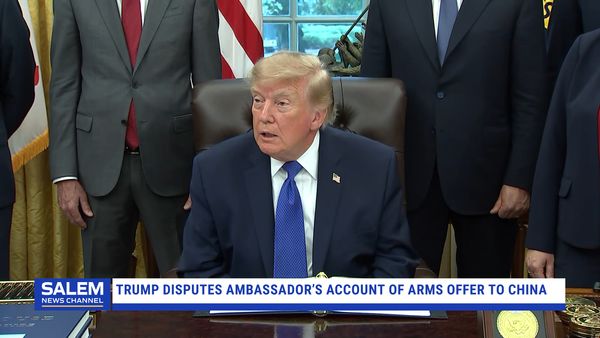
President Donald Trump is disputing an account from U.S. Ambassador to China David Perdue that Trump asked Chinese President Xi Jinping whether China wanted to purchase American weapons.
Perdue made the claim Sunday during an appearance on “Fox News Sunday,” days after Xi concluded a state visit to Washington. While discussing U.S. weapons sales to Taiwan, Perdue said Trump had asked Xi “at one point” whether China would be interested in buying American military equipment.
Perdue did not say when the alleged conversation occurred or describe Xi’s response.
Asked about the ambassador’s remarks Monday, Trump appeared surprised and suggested Perdue may have confused China with Taiwan.
“To China? You mean to Taiwan?” Trump responded before saying he had not discussed selling weapons to Beijing.
Trump later suggested China might be interested in American military equipment and said “maybe it’s a good idea,” but reiterated that such a sale had not been discussed.
The State Department also distanced the administration from Perdue’s remarks, saying U.S. law prohibits arms sales to China and that there is currently no offer or plan to sell American weapons to Beijing.
The conflicting accounts come amid continued tensions over U.S. military support for Taiwan. Washington is Taiwan’s primary arms supplier, while Beijing has repeatedly demanded that the United States stop selling weapons to the self-governed island.
The United States does not maintain formal diplomatic relations with Taiwan but is required under the Taiwan Relations Act to provide the island with defensive capabilities.
Perdue said during his interview that the Trump administration’s policy toward Taiwan has not changed and defended the president’s record of approving weapons sales to the island.
The issue comes just days after Trump hosted Xi for a three-day state visit in Washington. During their private discussions, Xi urged Trump to oppose Taiwanese independence, according to Chinese state media.
China’s Foreign Ministry did not confirm Perdue’s account when asked about it Monday. A ministry spokesperson instead said Beijing continues to strengthen its defense capabilities based on its national needs.
The U.S. has not sold weapons to Beijing since the 1980s, and resuming such sales would represent a significant departure from longstanding American policy toward China.
The discussion focuses on the controversial stance of certain political figures, including AOC, who advocate for the abolition of ICE (Immigration and Customs Enforcement). The speaker critically examines the rationale behind abolishing ICE, questioning the logic of allowing millions of people into the country legally and then disbanding the agency responsible for their apprehension and deportation. The argument is made that for-profit detention centers have no incentive to release detainees, only to fill their facilities, which is seen as a conflict of interest. The speaker also touches on the broader issue of illegal immigration and the consequences it has on the operation of ICE, suggesting that the presence of private detention centers is a result of the administration's policies on immigration.
Further into the conversation, the speaker refutes claims that ICE officers act without reason or due process, emphasizing the importance of a lawful criminal justice system. The legitimacy of ICE's actions is defended by highlighting their role in apprehending individuals who have been ordered removed by federal judges. The discussion underscores the tension between enforcing immigration laws and the humanitarian aspects of immigration policy, with the speaker advocating for a balanced approach that respects both legal processes and human rights.
Larry Elder discusses a foiled terror attack in the United Kingdom. British police arrested five men suspected of preparing terrorist attacks. The suspects were allegedly targeting a U.S. Air Force base in the UK, which has been used for deploying large bombers and has been controversially involved in the American-Israeli conflict against Iran. This incident highlights the ongoing threats of hybrid attacks, where actions are designed to avoid culpability in Europe and are likely orchestrated by Russia or proxies connected to Iran. The conversation also touches on previous incidents, including arrests in Britain for planning arsenic attacks and accusations against Iran's IRGC for directing attacks on Jews in Britain and Europe. The president praised the UK's efforts in thwarting the plot, emphasizing the importance of international cooperation in combating terrorism.
In this thought-provoking discussion, the complexities surrounding Bill Gates' influence and opinions on artificial intelligence are explored. The conversation delves into the potential dangers AI poses, including its capability to cause significant harm. The discourse also touches upon the involvement of Bill Gates in controversial matters, such as the Epstein files, and questions why his perspectives are frequently sought after. The dialogue further highlights the necessity for global governance and regulation in the AI sector, emphasizing the role of law enforcement and politicians in ensuring these safeguards. This analysis offers a critical examination of the intersection between powerful tech figures and global policy-making.
GOP naysayers are already saying the midterms look grim for republicans. Lame duck Senator John Cornyn doesn't think Ken Paxton has what it takes to beat James Talarico. Sound familiar? Remember 2016? Hillary was up in every poll, the pundits had already measured the drapes in the Oval Office—and Trump won. Pre-election polls are snapshots, not prophecies. The only poll that matters is on Election Day.
------
M and M Extra! If you love smart unscripted talk show chemistry, you’re in the right place. Two iconic talk radio hosts. One unfiltered daily conversation. No scripts. No spin. Just Mike Gallagher and Mark Davis breaking down the news the way it should be with zero apologies.
Like and subscribe to youtube.com/@MandMExtra for more content.
Watch full episodes here:
https://www.youtube.com/playlist?list=PL8EGNf1WbbwMRurHjD-q-sft3OQfbxop8
Check out highlight clips from all our shows:
https://www.youtube.com/playlist?list=PL8EGNf1WbbwPQn44WIEh9LfT3hP1lng9w
In this insightful discussion, Scott Jennings analyzes the upcoming midterm elections, framing them as a battle between mainstream and extreme political ideologies. Jennings emphasizes the urgency for Republicans to mobilize and communicate their core values effectively to counteract what he describes as the Democrats' radical agenda. He outlines key Republican principles, such as preserving constitutional foundations, maintaining strong borders, and supporting local law enforcement. Jennings warns against the Democrats' proposals to fundamentally transform the U.S. government, including the potential abolition of the Senate and Supreme Court, and the expansion of federal power into traditionally state domains. He concludes by urging Republicans to clearly articulate their vision of a strong, sovereign America to sway undecided voters in the upcoming elections.
Polls can miss the mark, predictions can change overnight, and political frustration can tempt people to sit out or make a protest choice. But none of that changes the basic reality of an election: the outcome is determined by the voters who actually show up. From disputed races and unexpected polling misses to primary battles and calls to stay home, the message is simple—don’t let the noise convince you that your vote doesn’t matter.
Newt Gingrich, the former Speaker of the House, discusses the 2026 midterms, urging Republicans not to be discouraged by negative expectations and to focus on making a clear case to voters. He addresses affordability, taxes, government spending, Iran, health care and immigration. Gingrich emphasizes the importance of communicating a broader vision to voters, invoking Margaret Thatcher’s principle: “First you win the argument, then you win the vote.”
An illegal alien, previously arrested multiple times, shot Jimmy, leaving him paralyzed. Despite his injuries, Jimmy has been fighting for justice, advocating for the shooter to face severe consequences. The case highlights the failure of local law enforcement to cooperate with ICE, facilitated by Soros-backed district attorneys in Texas. This story underscores the broader issue of sanctuary cities within traditionally red states, affecting public safety and justice. We also discuss how local policies, including those protecting DACA recipients from DUI charges, violate civil rights statutes. Jimmy's resilience and the community's support in his recovery are highlighted, emphasizing the need for political change to ensure public safety and justice.
The last few years have been interesting, with regard to things like crime. Despite the doomsaying from the anti-gunners, the post-Bruen homicide bump never actually happened. Quite the opposite, really. The violent crime rate has dropped, and there's evidence that it's dropping for 2026 as well.
Hugh Hewitt is one of the nation’s leading bloggers and a genuine media >>Hugh Hewitt is one of the nation’s leading bloggers and a genuine media revolutionary. He brings that expertise, his wit and what The New Yorker magazine calls his “amiable but relentless manner” to his nationally syndicated show . . . . <<
Larry Elder personifies the phrase “We’ve Got a Country to Save” The “Sage from >>Larry Elder personifies the phrase “We’ve Got a Country to Save” The “Sage from South Central” is back on the radio and TV! <<
Hugh Hewitt is one of the nation’s leading bloggers and a genuine media >>Hugh Hewitt is one of the nation’s leading bloggers and a genuine media revolutionary. He brings that expertise, his wit and what The New Yorker magazine calls his “amiable but relentless manner” to his nationally syndicated show . . . . <<
Salem Media, our partners, and affiliates use cookies and similar technologies to enhance your browsing experience, analyze site traffic, personalize site content, and deliver relevant video recommendations. By using this website and continuing to navigate, you consent to our use of such technologies and the sharing of video viewing activity with third-party partners in accordance with the Video Privacy Protection Act and other privacy laws.Privacy Policy